An existing pig slaughter line upgrade must connect new equipment to a plant that has fixed floors, rails, drains, utilities and working routines. Start with a measured survey and a clear description of the problem: a worn machine, difficult cleaning access, an incompatible transfer, a changed product route or a broader process constraint. Buying a replacement before that review can leave the original interface problem unresolved.
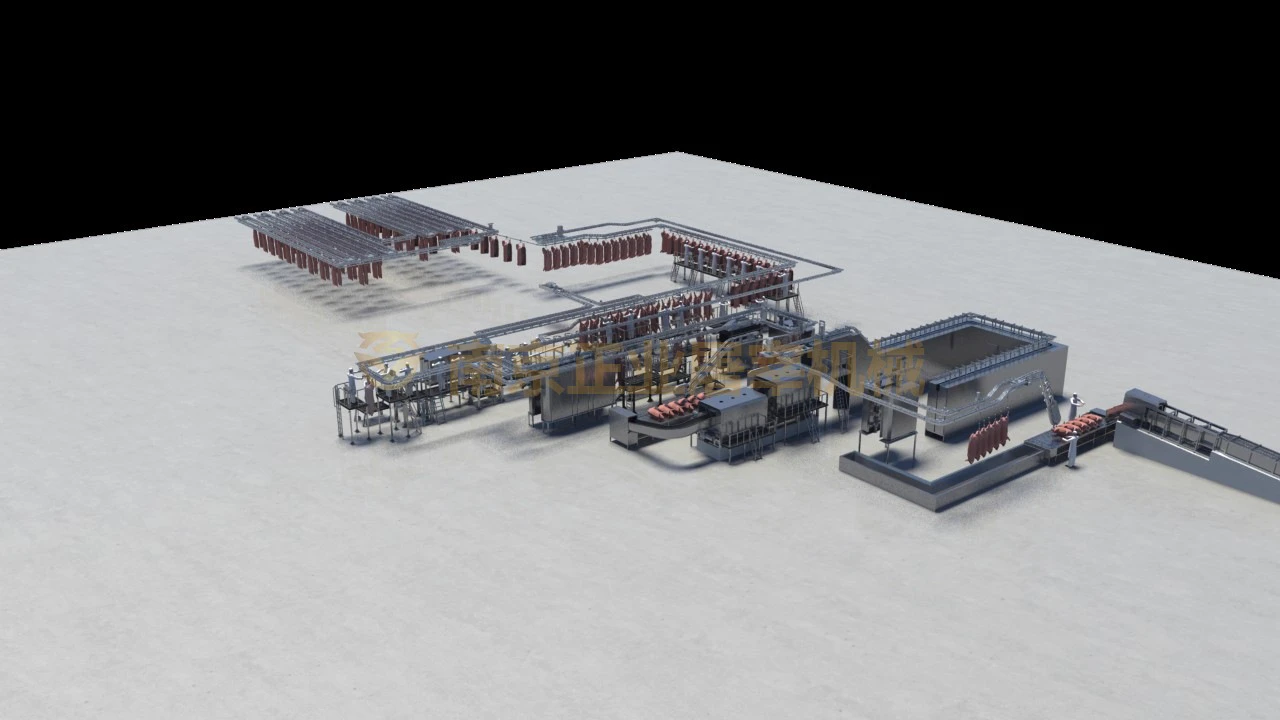
Define what remains in service
- List the retained machines, their condition and the available manuals or interface drawings.
- Measure floor and rail levels, column positions, clear heights, drains and existing transfer points.
- Record current electrical, heat, water and wastewater connections and any restrictions on changing them.
- Identify the inspection and cold-chain steps that must remain compatible with the altered route.
Concept example: replace the wet-process module
Where bleeding and dressing are retained, a scalding/dehairing replacement has two fixed boundaries: the bleeding outlet and the entry to dressing. Survey both before selecting the module. Then review water, heat, hair handling, drains, service access and any change to carcass transfer. The concept must explain how the existing line connects during the final arrangement and which preparatory building work is needed.
Concept example: improve rail-to-chiller transfer
If the project concerns suspended carcass movement, map the inspection outlet, weighing point, rail route, cold-room doorway and internal cold-room rail. Check elevations and support structures with the building engineer. A new conveyor or transfer device may also require changes to hanging components, controls or maintenance access; identify those items in the scope instead of assuming direct compatibility.
Plan the changeover and its responsibilities
- Agree which existing process areas must be available during construction and the acceptable shutdown windows.
- Separate preparatory civil and utility work from machine removal, new installation and final connection.
- State who measures and accepts each old-to-new interface before equipment fabrication or shipment.
- Define the checks needed for transfer, controls, sanitation, operator access and local veterinary review before returning to operation.
Prepare a retrofit enquiry
Provide a marked plan, photographs at each retained interface, the reason for the change, the operating pattern and the intended product route. Include the desired installation window and items that cannot be moved. The review should produce a retained/new scope drawing and a list of unresolved interfaces. An upgrade does not establish a higher production rate by itself; the complete process and utilities determine what the modified facility can support.
Compare the scalding/dehairing module, rail and transfer planning and inspection workflow. Submit measured interface information.