A suspended pig bleeding conveyor carries the animal through a defined bleeding route and coordinates hanging, blood collection and transfer to the next wet-process station. The illustrated arrangement uses overhead rails with a collection trough. A quotation must establish the transport route and interfaces rather than rely on the apparent length of a photograph.
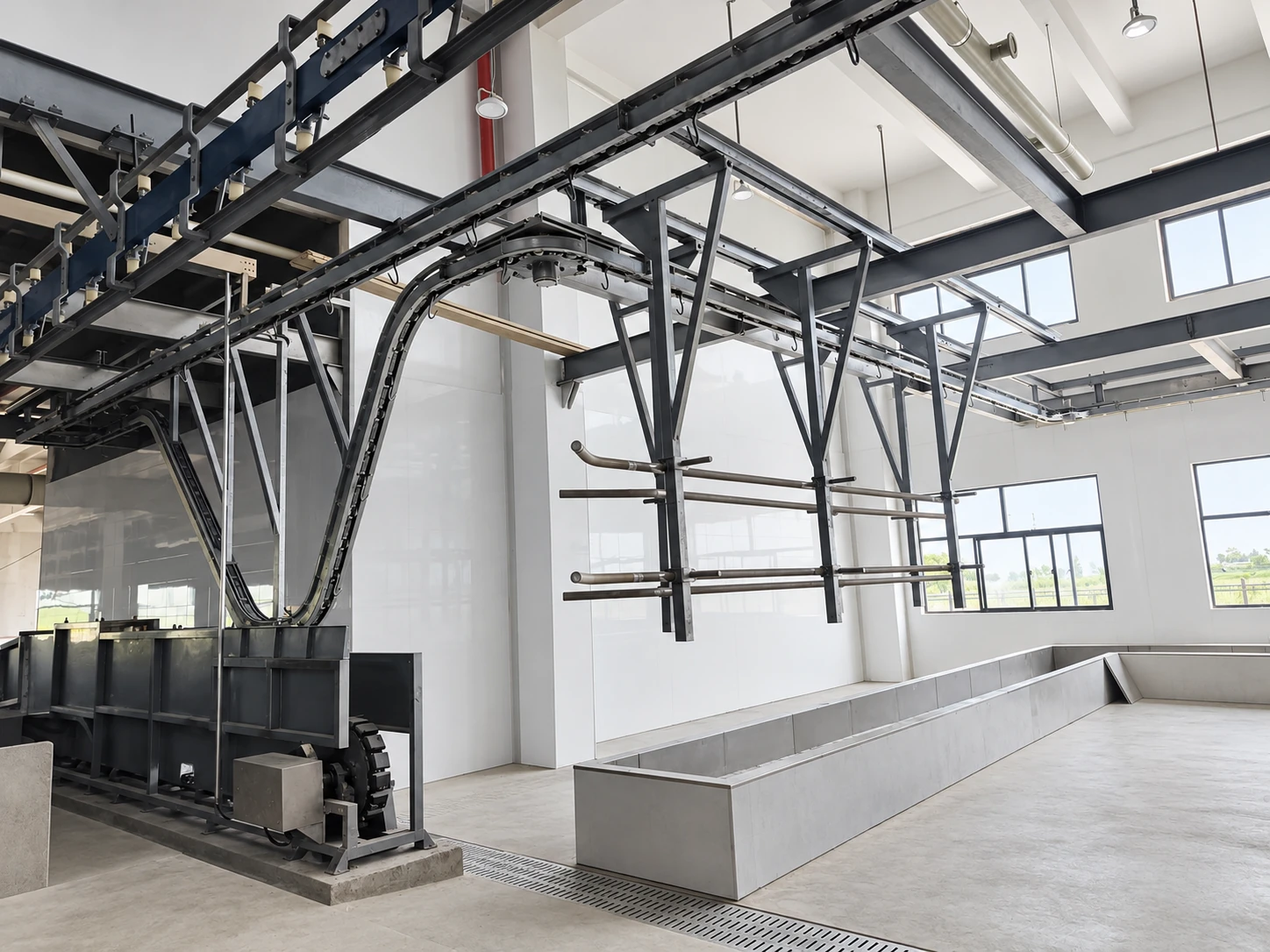
What the conveyor must connect
- Inlet: identify the hoist, hanging arrangement and point at which the animal enters the suspended rail. Record any retained rail, trolley or drive equipment.
- Bleeding route: show the proposed rail path, blood collection area, working positions and cleaning access. The required process time belongs in the reviewed design brief.
- Outlet: identify the transfer to pre-washing or scalding and the change in elevation or transport method, if any.
- Waste route: distinguish blood collection from other drainage and show where the collected material will be handled. Confirm the site’s disposal or by-product plan with local authorities.
Suspended transport: questions to resolve
- How will the hoist deliver to the overhead rail, and which hanging components are already specified?
- Is there enough clear height for the rail, suspended product and operator tasks?
- Where can the collection trough, cleaning access and floor drainage fit without blocking the animal or personnel route?
- How will the operator identify and respond to a stopped conveyor or interrupted transfer?
- Who supplies the support steel, blood handling equipment, drains and connection to the scalding inlet?
Prepare a measurable interface sketch
For an existing plant, measure the hoist outlet, rail elevation, route length, turns, support positions and downstream inlet. For a new facility, draw the whole stunning-to-scalding section before allocating room dimensions. The quotation scope should distinguish conveyor equipment, hanging components, support structure, collection and building drainage. Capacity and timing require engineering and veterinary review for the intended operation.
Review stunning and entry transfer, the scalding system interface and an existing pig-line upgrade. Send the measured route for discussion.